Greece Beyond the Beaten Path
A Day on Amorgos, the Soul of the Cyclades
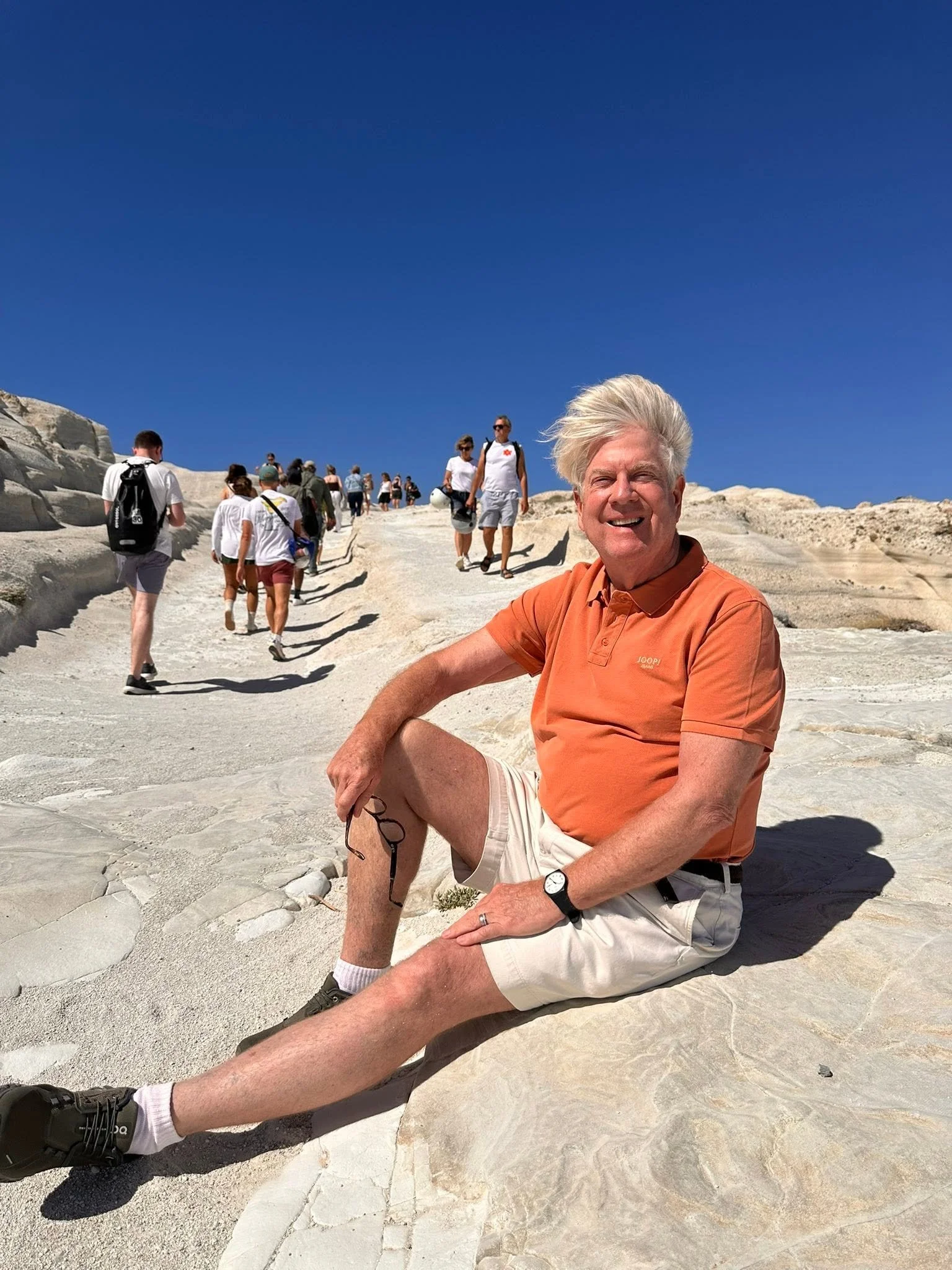
Today Kareem and I visited the enchanting island of Amorgos, one of the unforgettable stops on our marvelous Ponant cruise through the little-visited Greek isles.
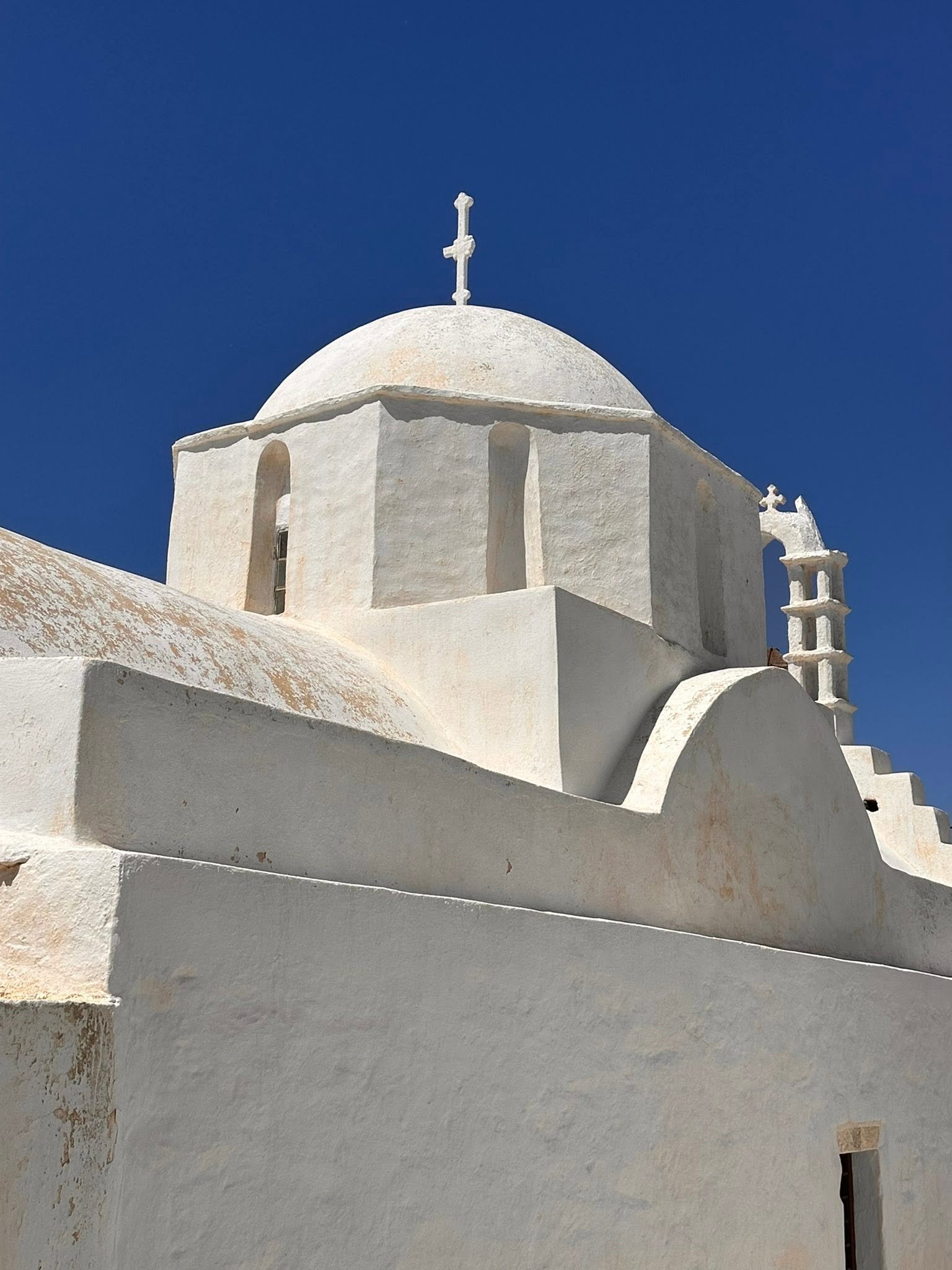
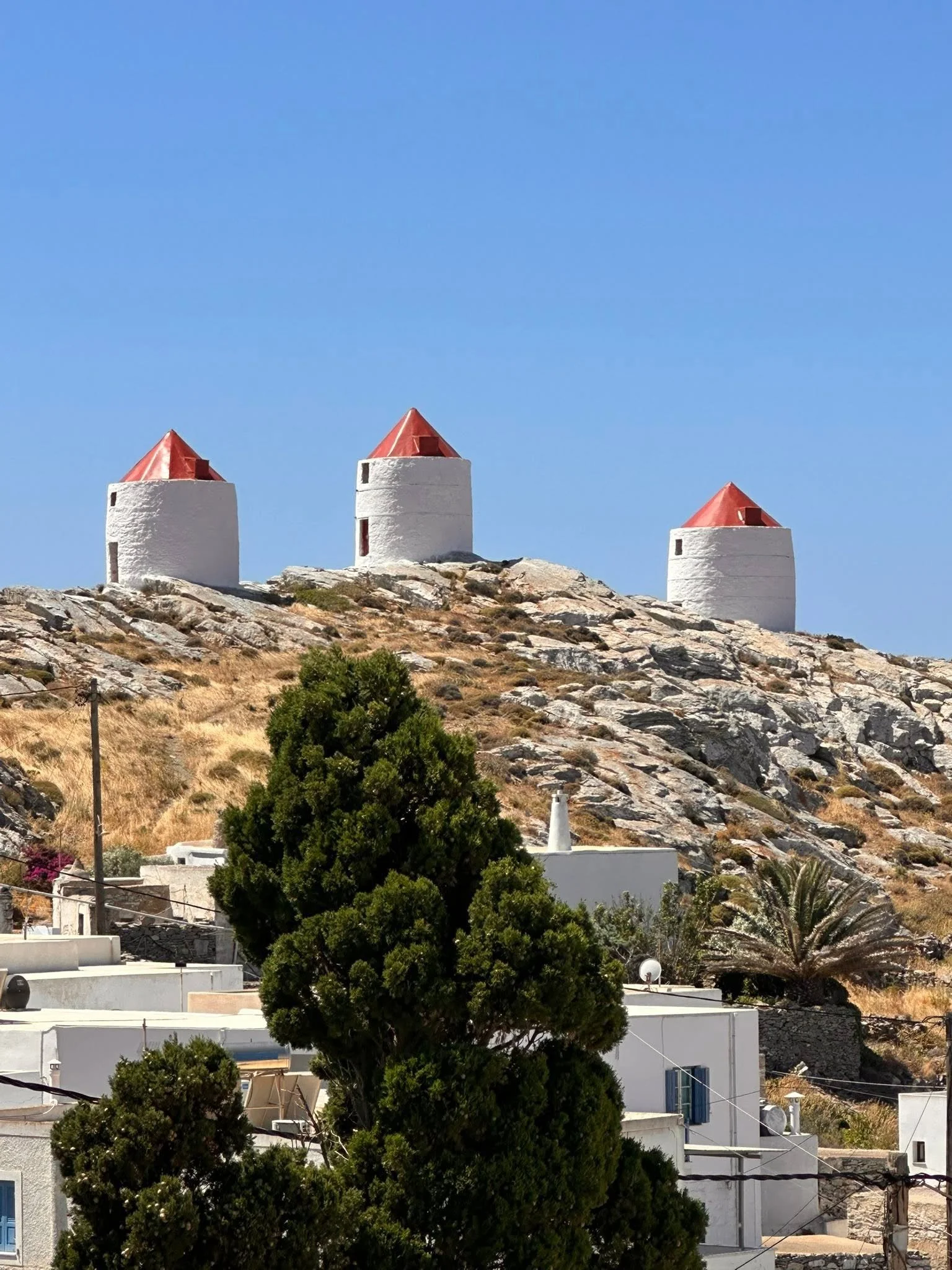
Located in the southeastern Cyclades, between Naxos and the Dodecanese, Amorgos feels wonderfully untouched- rugged, dramatic, and deeply authentic. Unlike some of Greece’s more celebrated islands, Amorgos remains blissfully unspoiled, offering a glimpse of the Aegean as it once was: whitewashed villages clinging to hillsides, crystalline waters, and landscapes shaped by wind, sea, and centuries of devotion.
The island carries remarkable historical and cultural importance, having been inhabited since antiquity and serving as an important maritime crossroads in the Aegean. Its austere beauty has long inspired artists, travelers, and spiritual seekers alike.
The true highlight of our visit was the extraordinary Monastery of Panagia Hozoviotissa, one of the most breathtaking religious sites in all of Greece. Built dramatically into a sheer cliff face nearly 300 meters above the sea, this 11th-century monastery appears almost suspended between earth and sky. Its dazzling white façade rises from the rock itself, creating a vision both improbable and profoundly moving. Standing there, gazing over the endless blue of the Aegean, one cannot help but feel humbled by the faith, perseverance, and artistry that created such a place.
Amorgos is not merely beautiful- it is soulful. An island of silence, history, and quiet grandeur, it leaves a lasting impression long after departure.
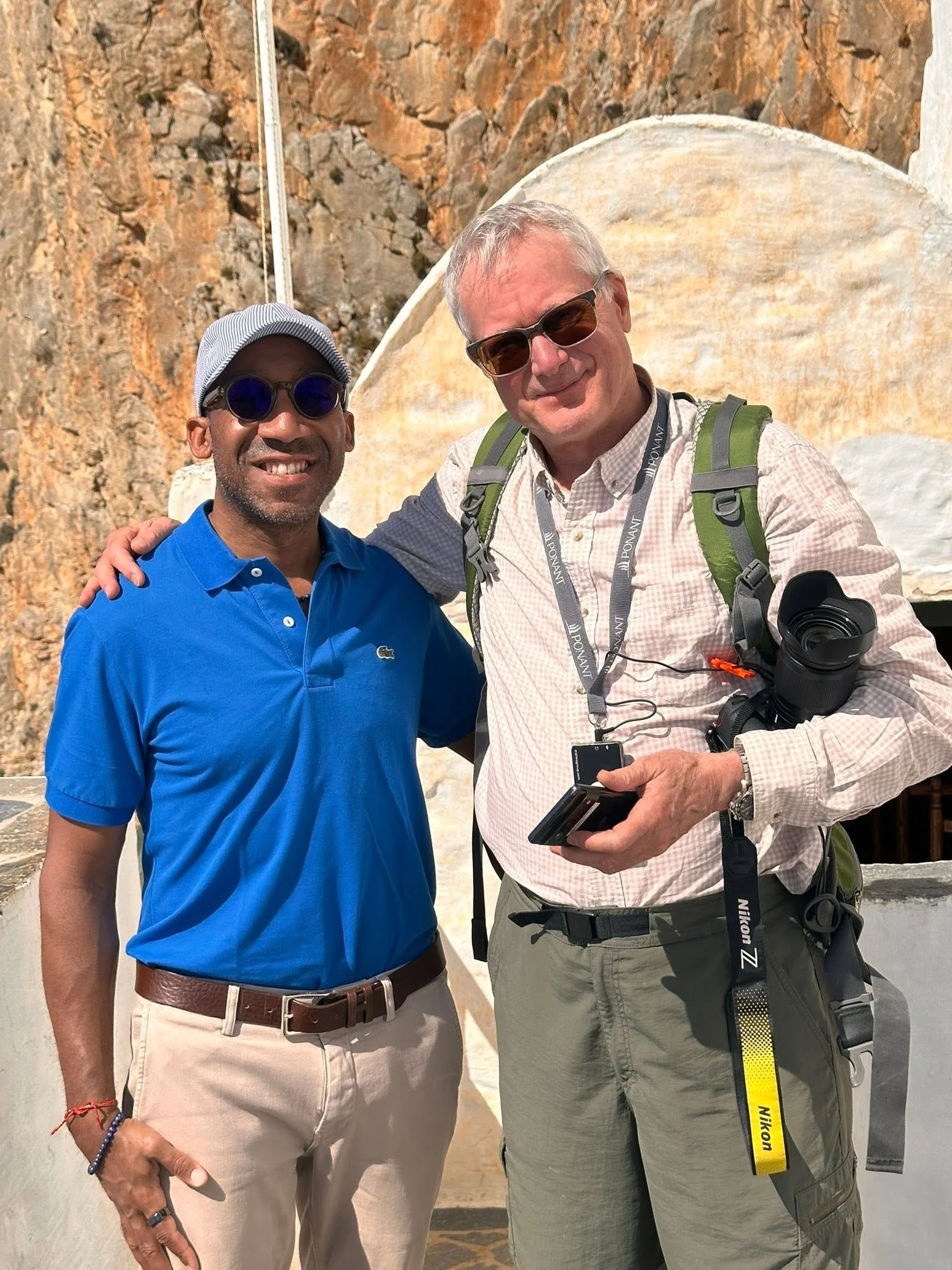
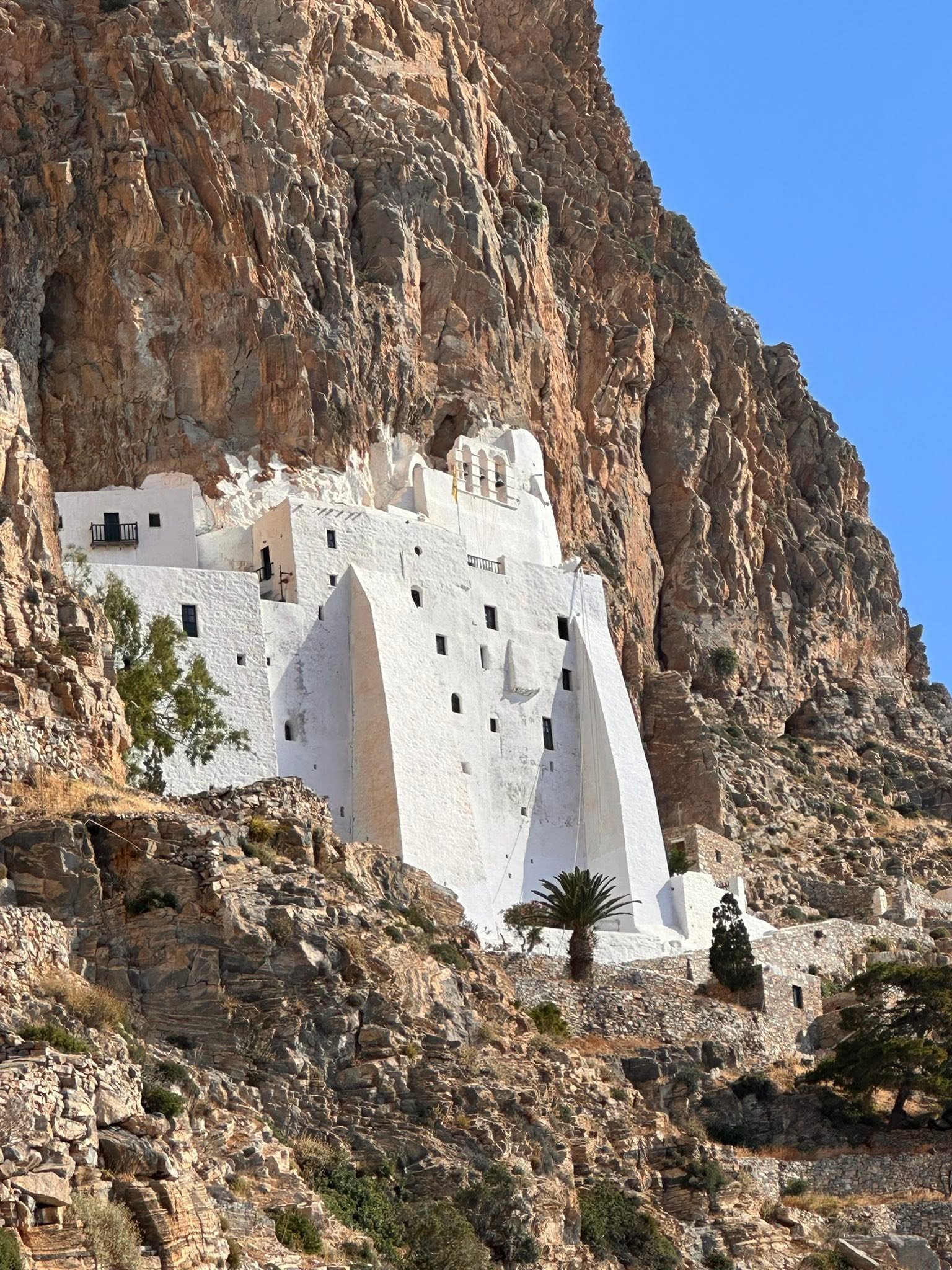
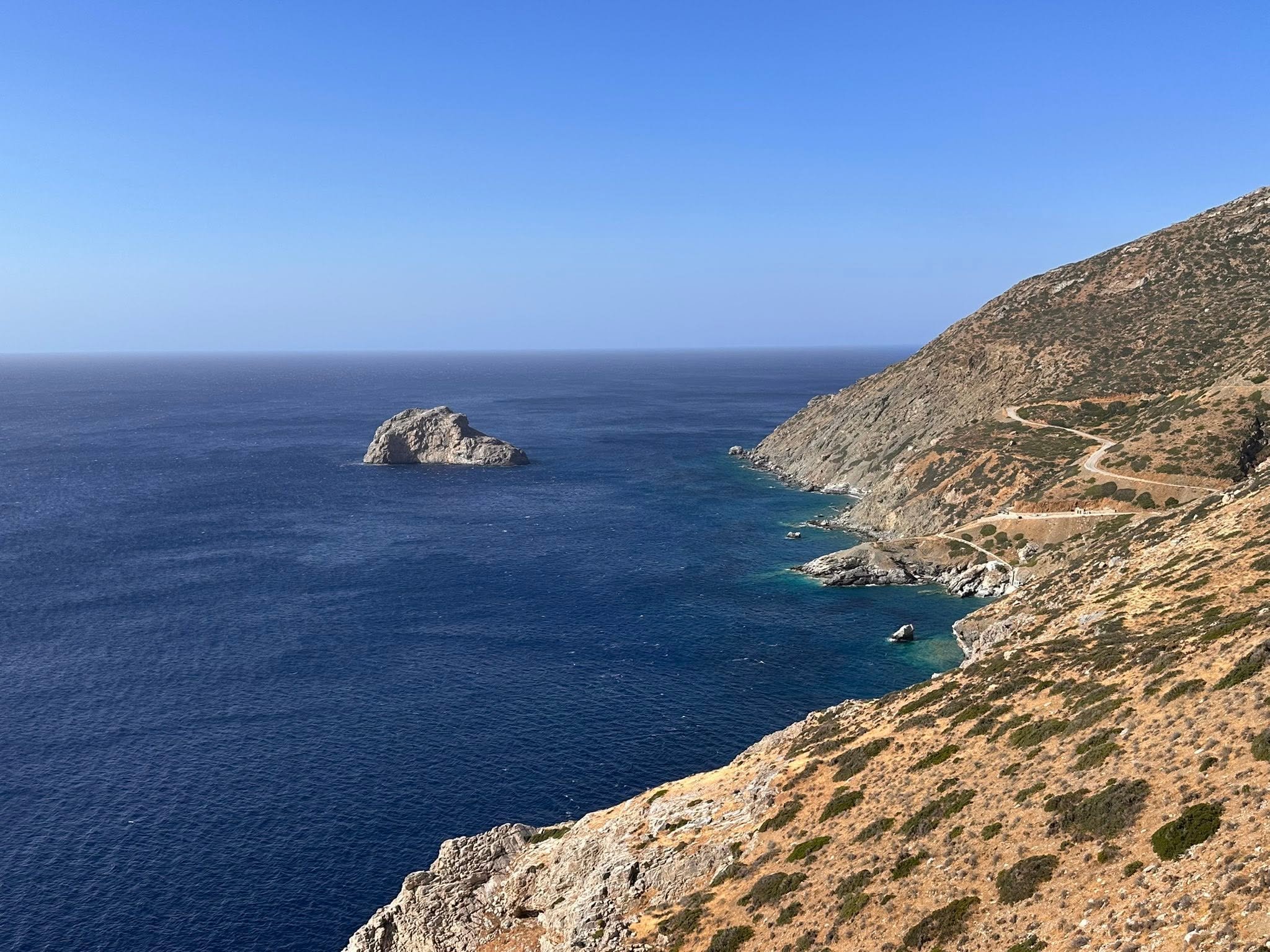
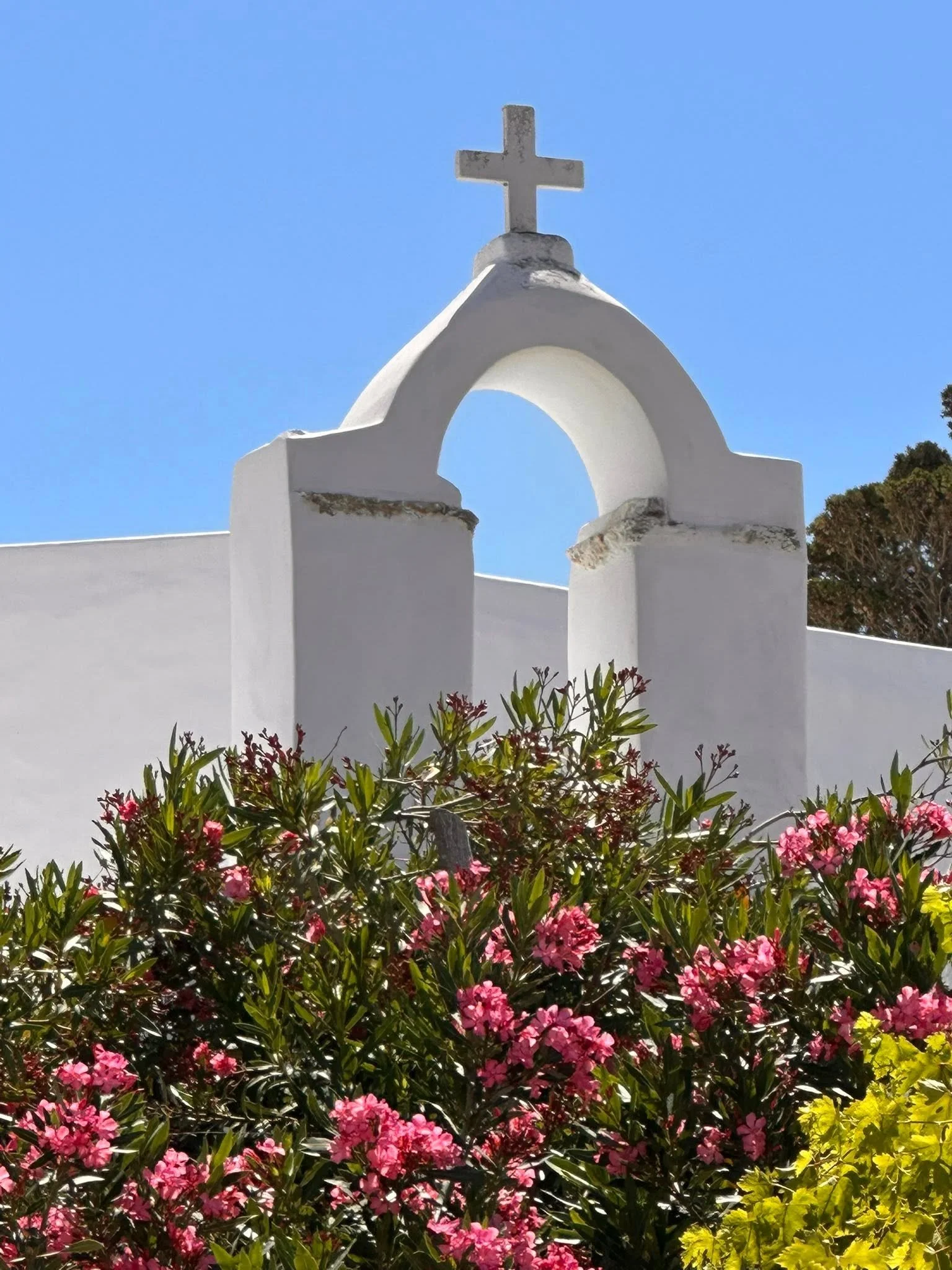
A Perfect Day in the Aegean
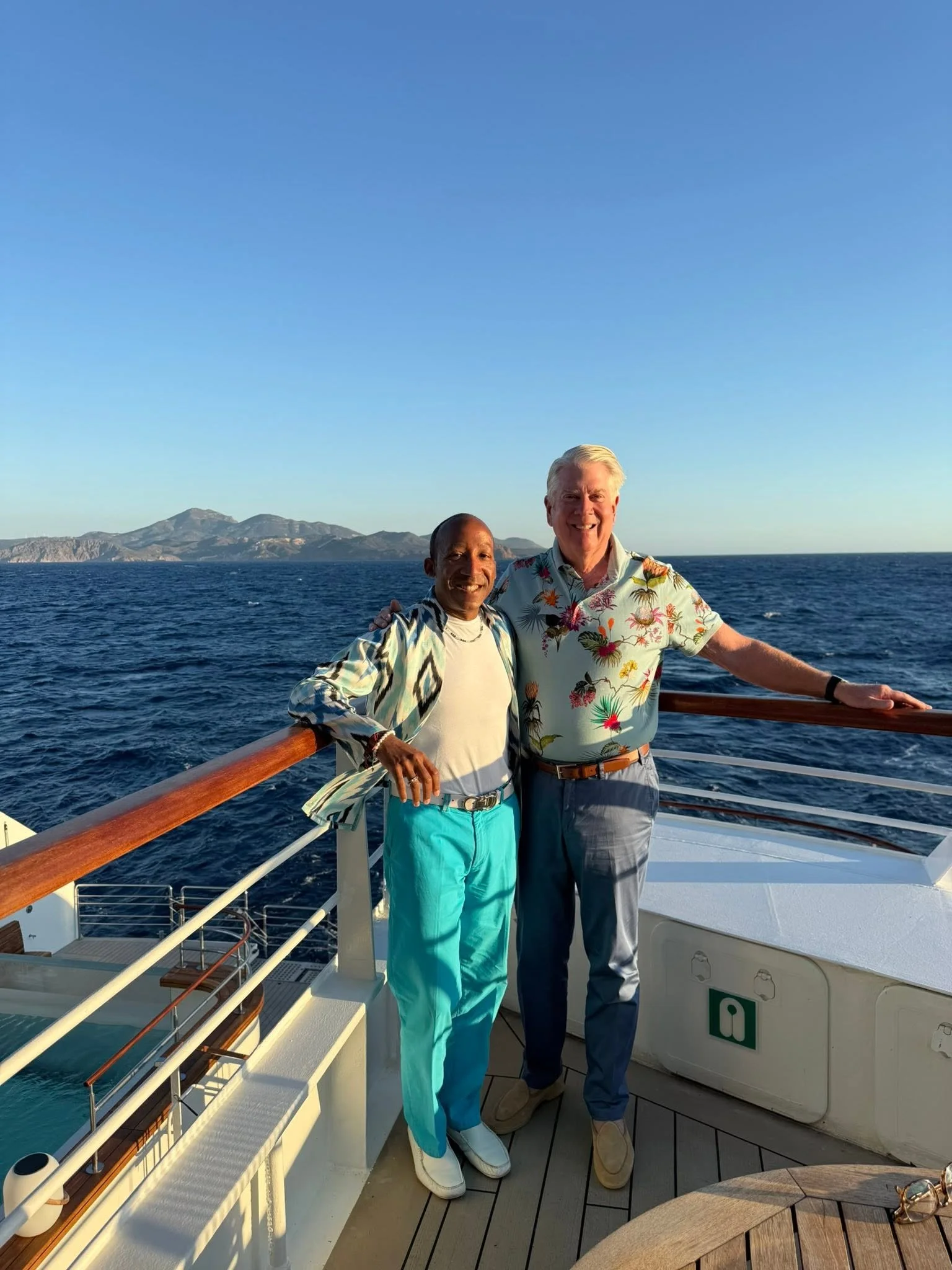
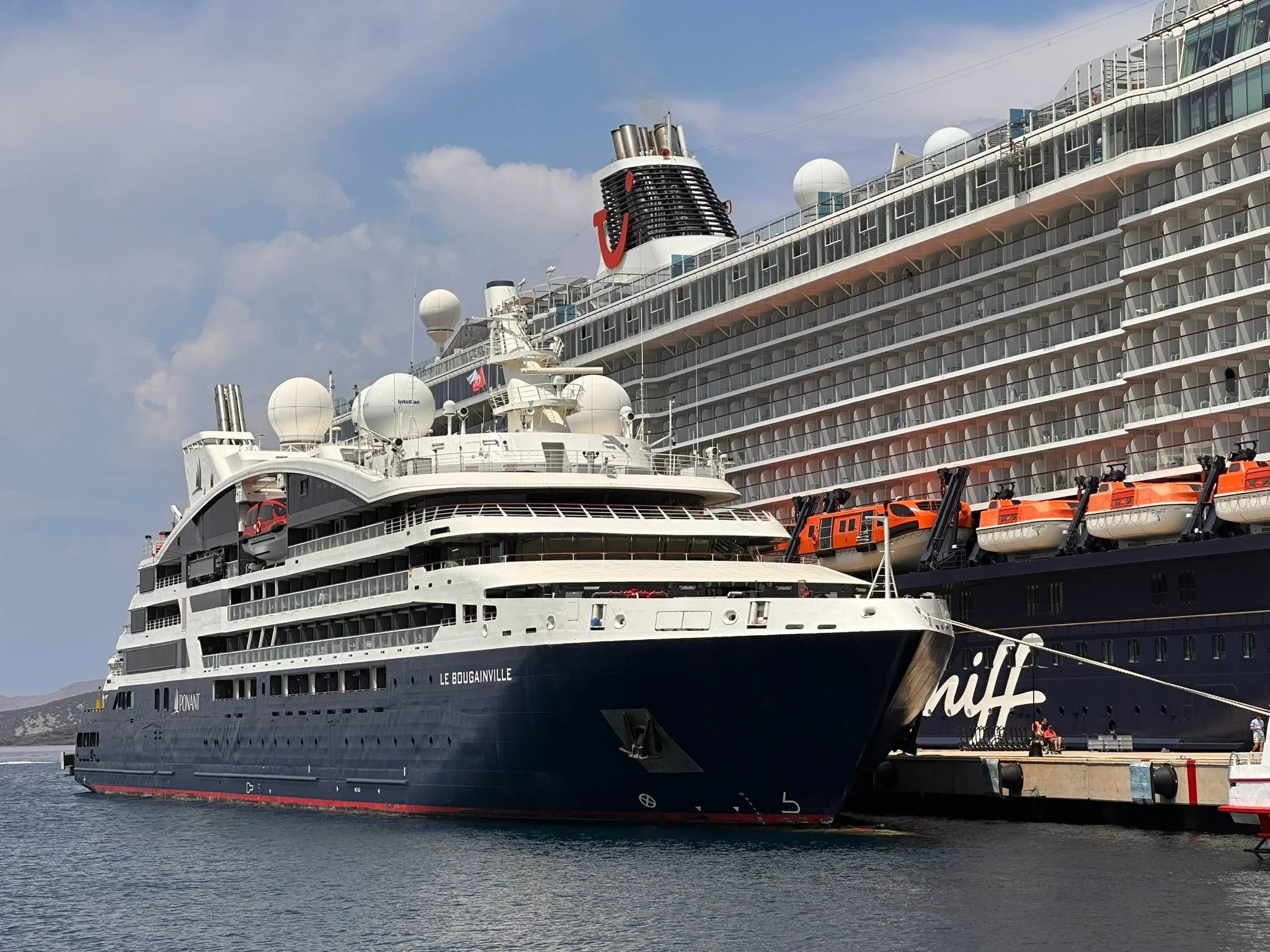
Sailing through the Aegean aboard Le Bougainville with Ponant is less like cruising and more like life aboard a beautifully appointed private yacht. Ponant embodies a distinctly French vision of luxury, with understated elegance, impeccable service, exquisite design, and quiet sophistication. With brilliant sunshine, sparkling seas, and perfect weather, today felt simply sublime.
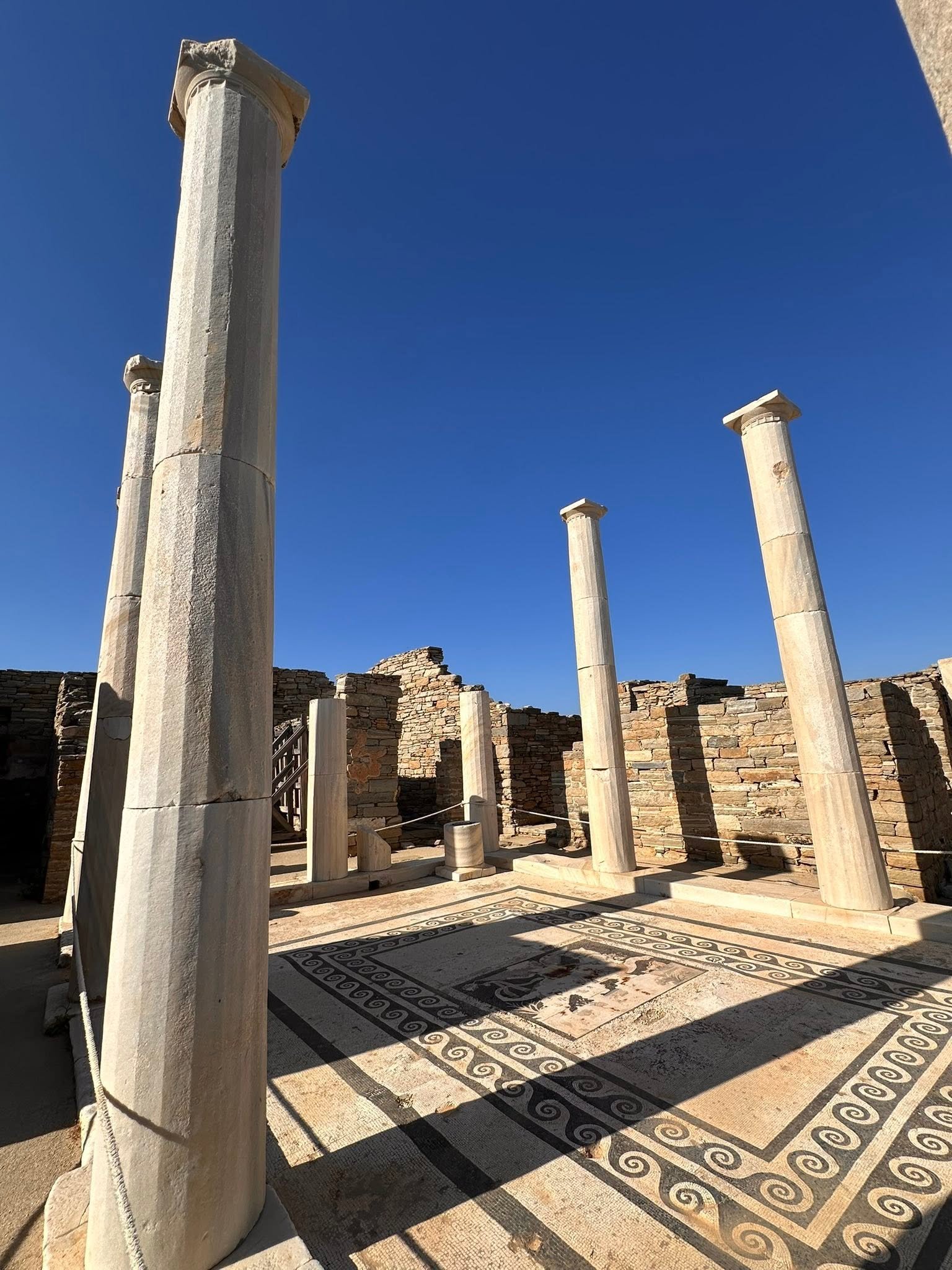
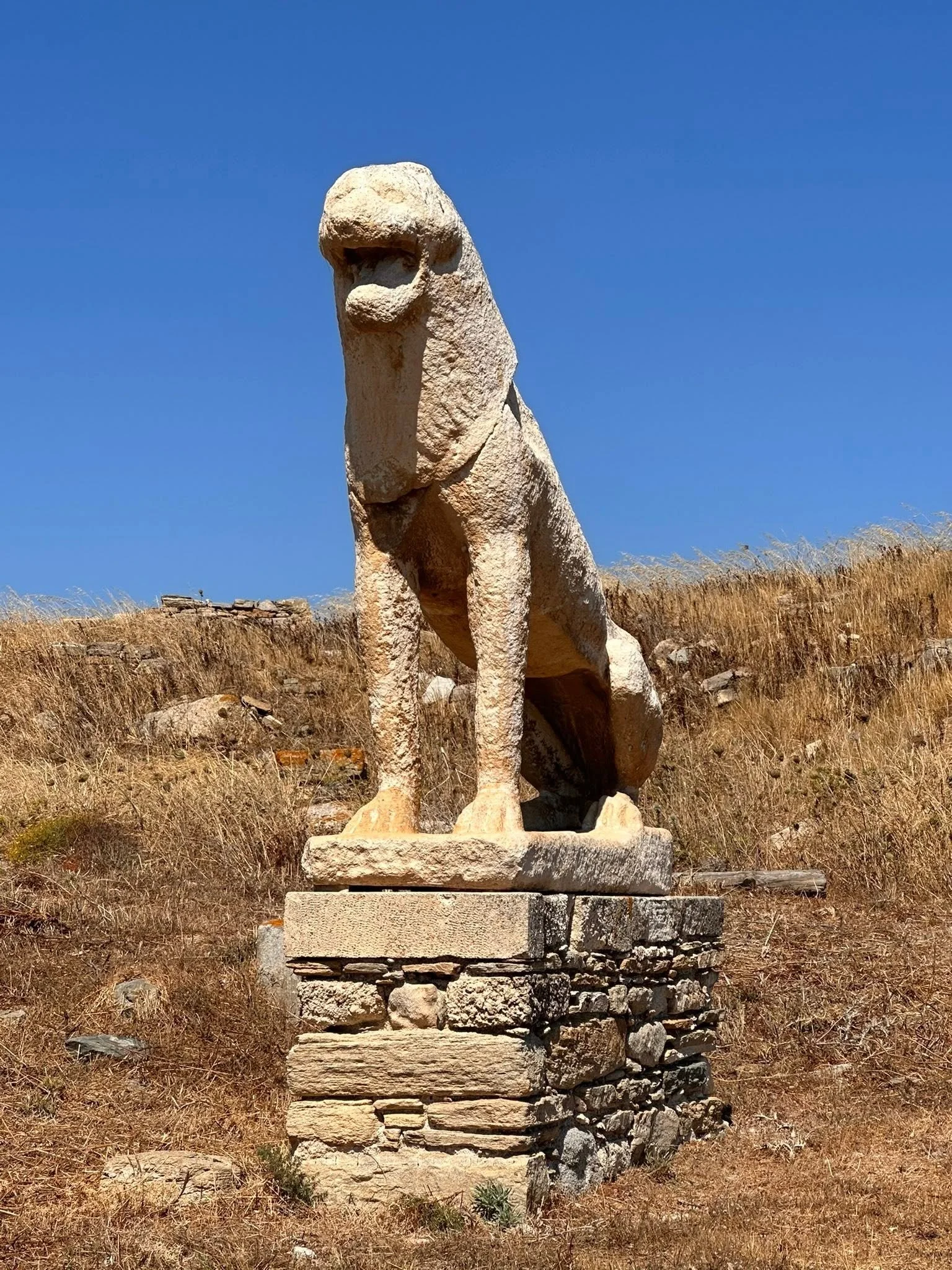
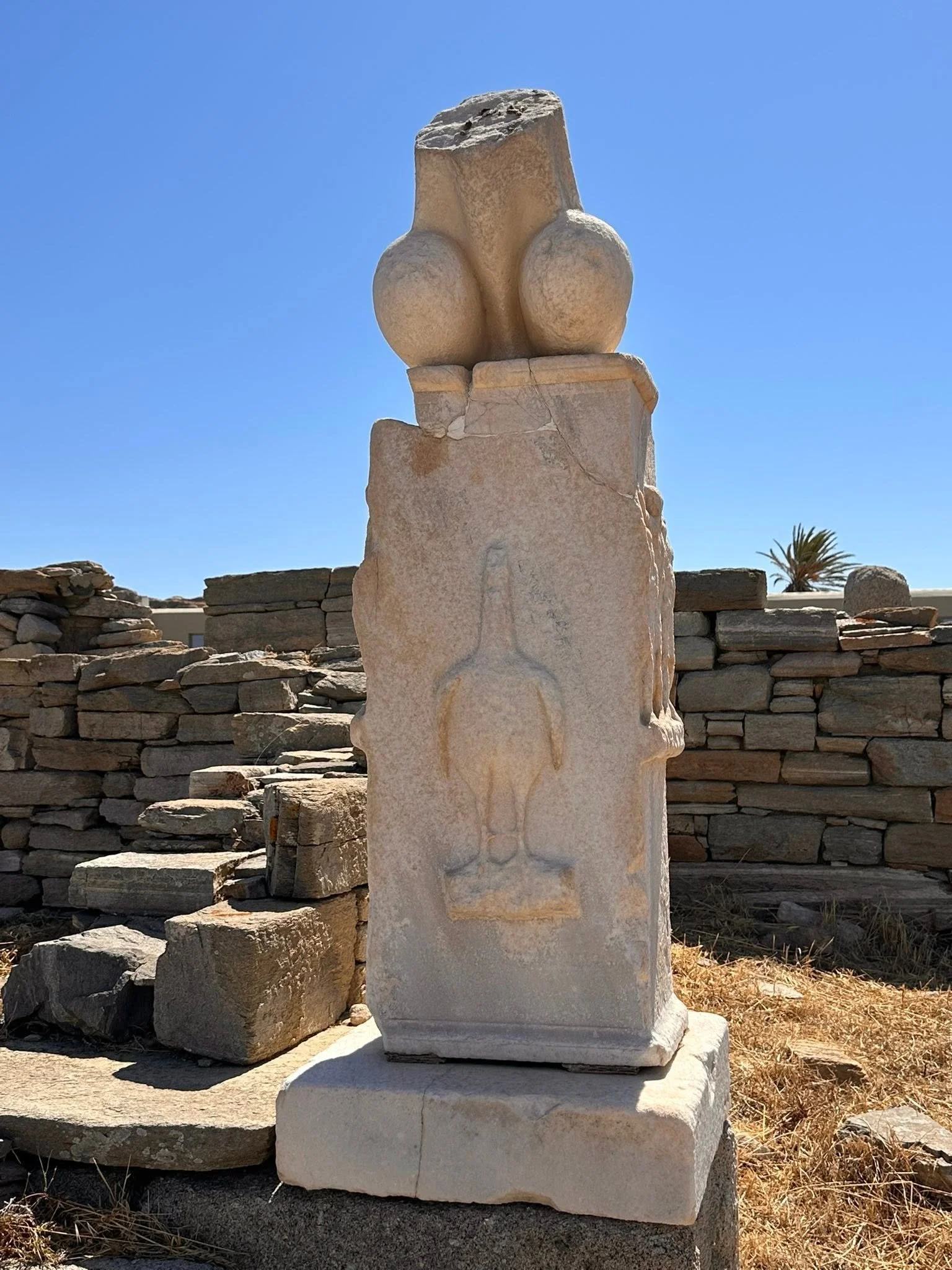
Today we stepped onto legendary Delos, one of the most important archaeological sites in Greece and the mythical birthplace of Apollo and Artemis. More than 2,000 years ago, Delos was a thriving religious and commercial powerhouse, essentially the ancient Mediterranean’s ultimate VIP destination, only with fewer beach clubs and far better mythology.
Walking among the ruins, temples, intricate mosaics, and marble lions, it was impossible not to feel the weight of history. Civilization, mythology, commerce, and power all converged on this tiny sacred island. Humbling and extraordinary.
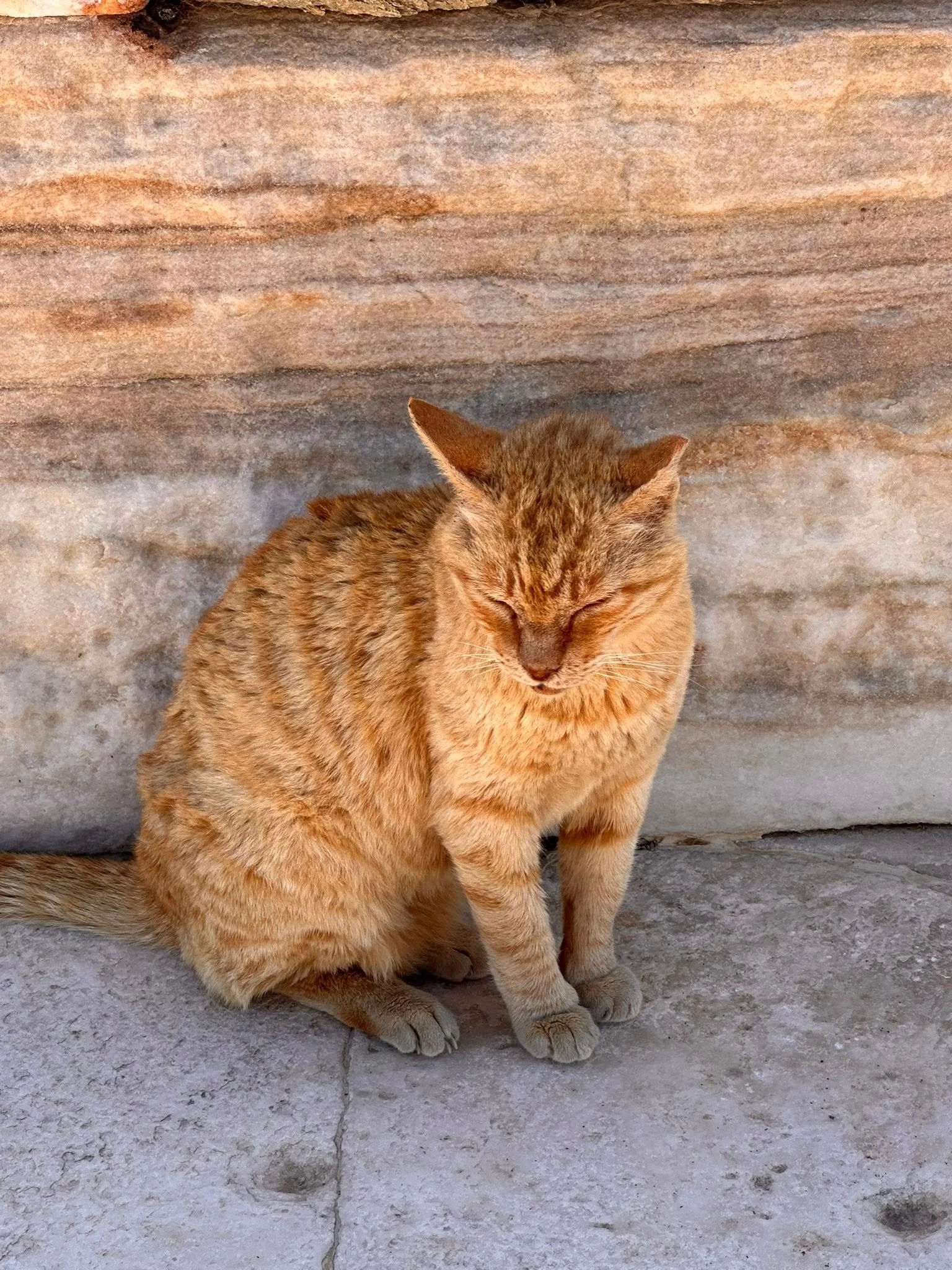
Also, a special note on Greece’s true ruling class, the cats. No matter where we go, there they are, lounging in ancient ruins, sunbathing in village squares, supervising harbors, and generally behaving as if the entire country belongs to them. Frankly, they may be right.
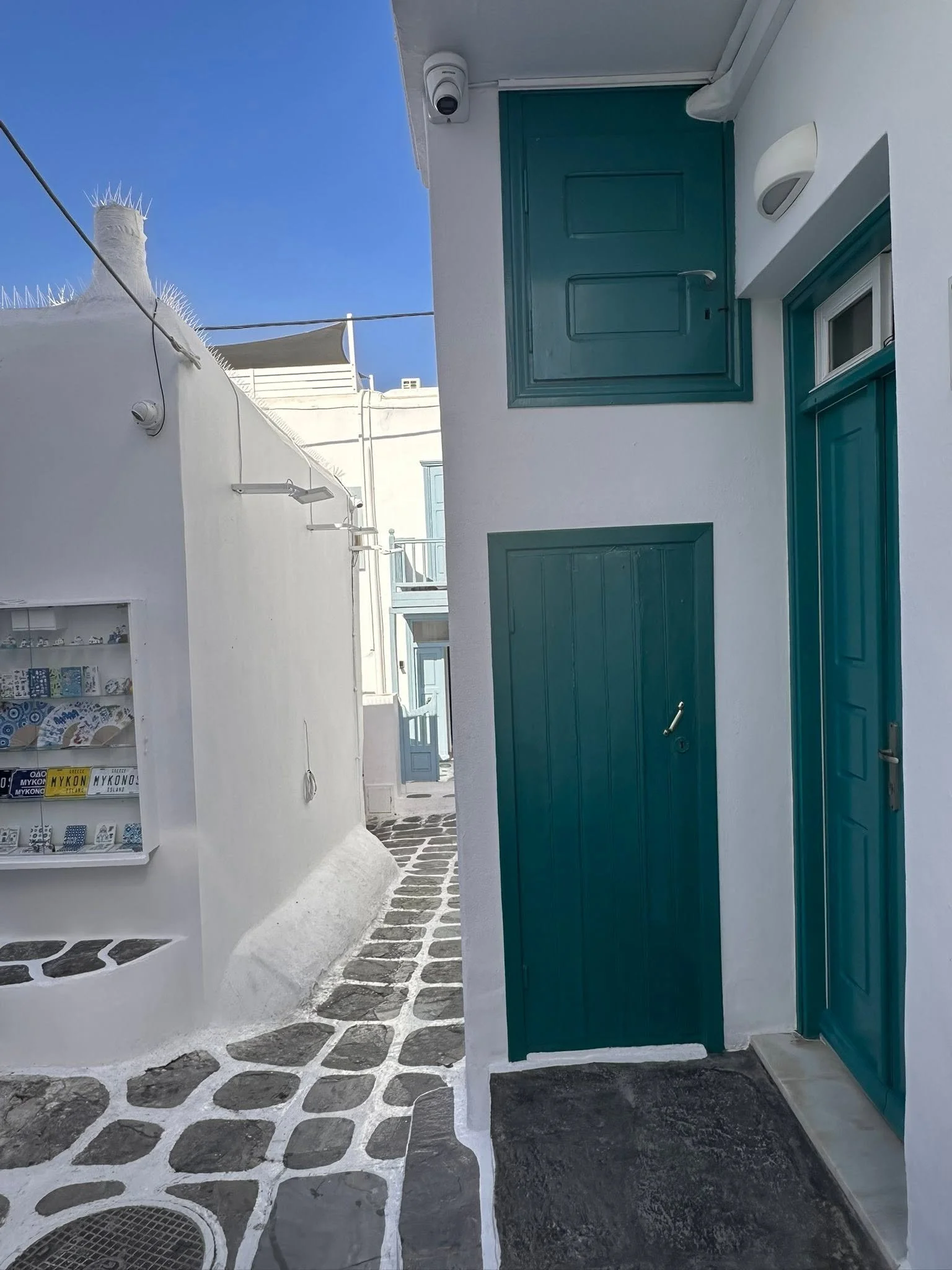
And then, because Greece understands contrast better than almost anywhere on earth, we ended our day in glamorous Mykonos, where the mood shifts effortlessly from ancient reverence to polished glamour, crisp linen, and sunset cocktails.
From ancient gods to Mykonos chic, with feline overlords watching every step, Greece never stops enchanting.

The Architecture of Emotion
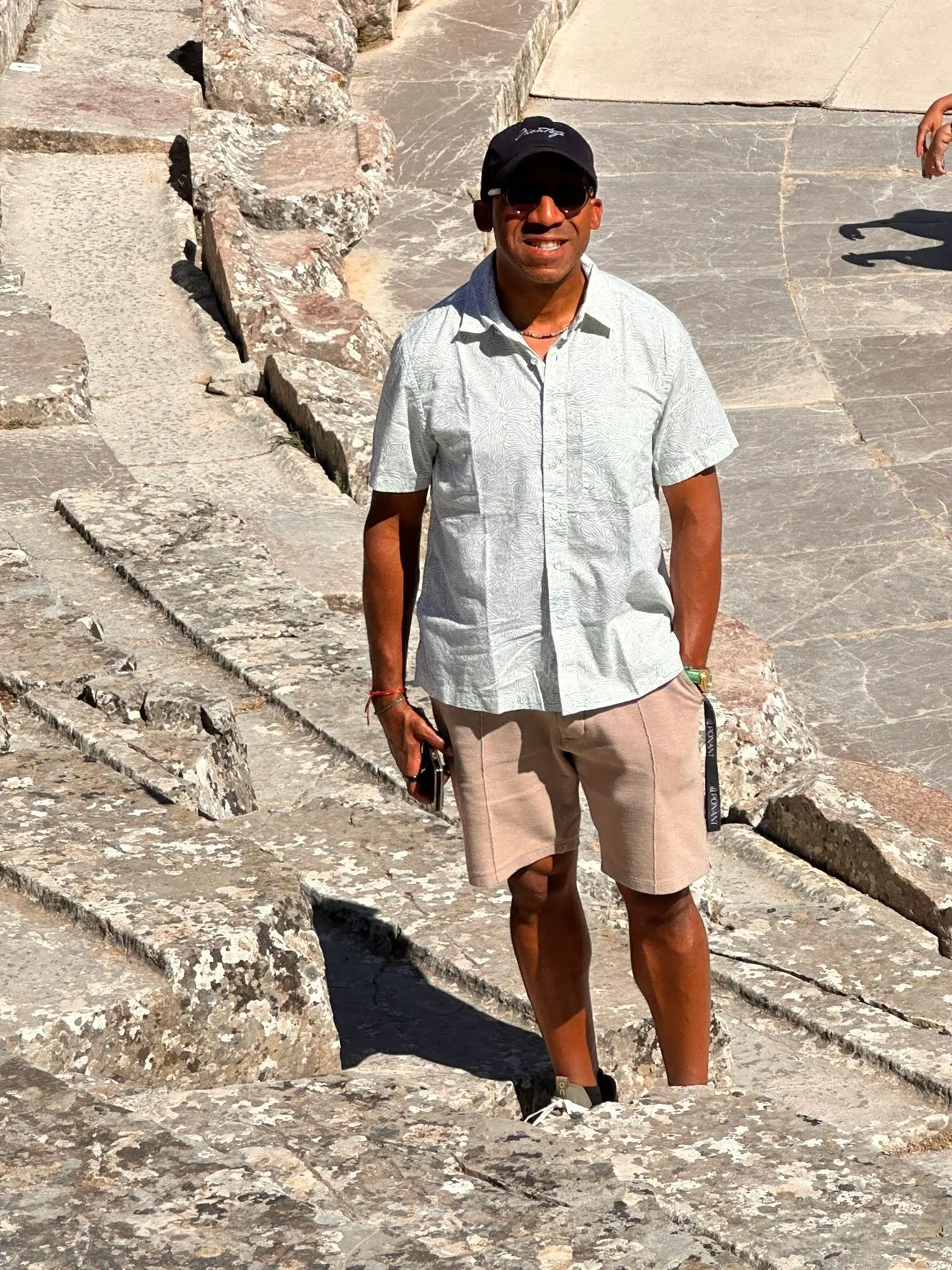
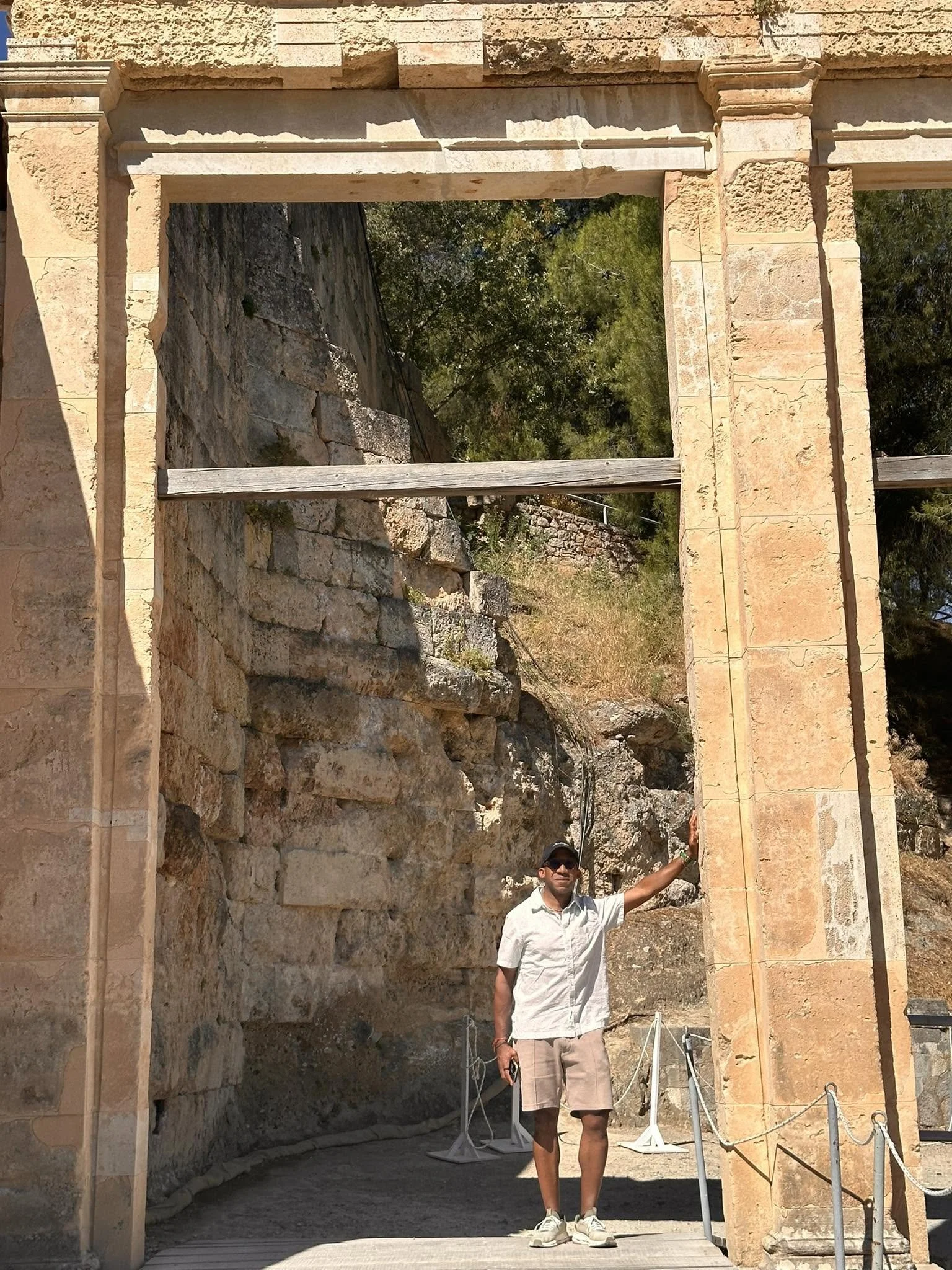
This morning, Kareem and I visited the sanctuary of Asclepius at Epidaurus, a landscape where medicine, myth, and theatre once formed a single language of restoration- and remarkably, all of it is only about a two-hour drive from Athens, yet feels like an entirely different world entirely.
There is something profoundly grounding about arriving early, before the heat settles and before the site fully wakes to visitors. In that quiet, Epidaurus doesn’t feel like an archaeological site so much as a held memory- a place where healing was understood as something far broader than the body alone, encompassing emotion, ritual, and story.
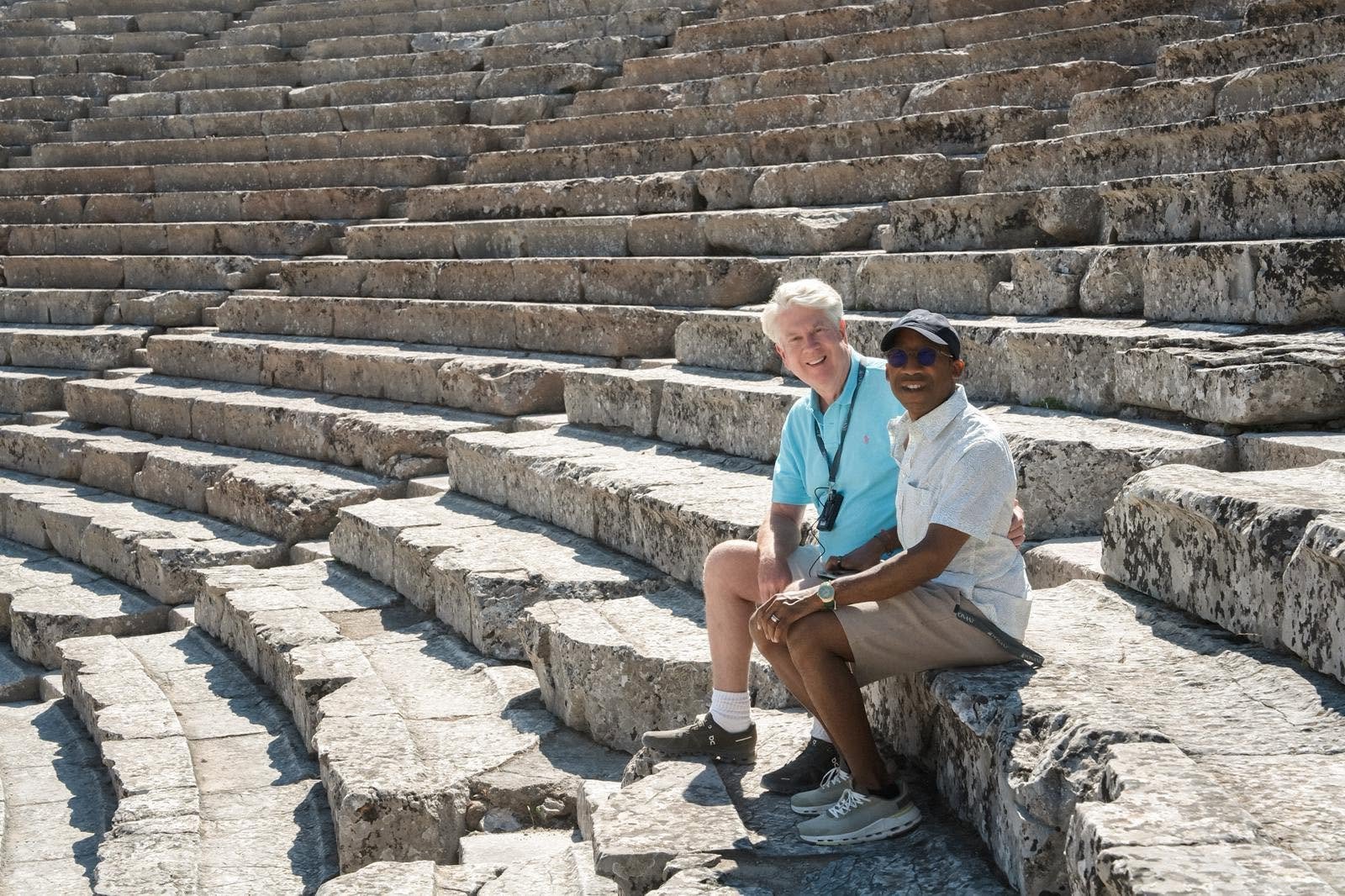
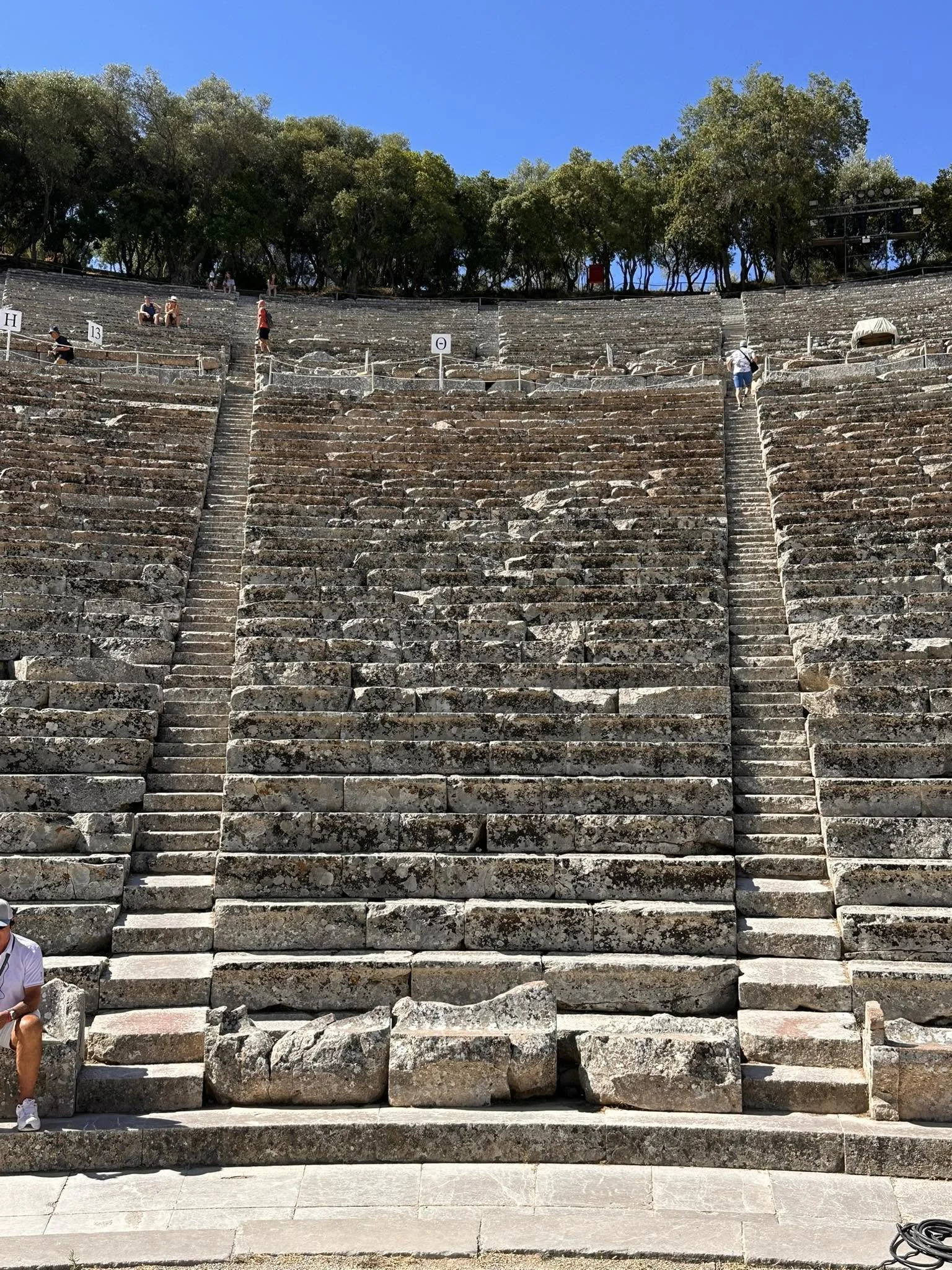
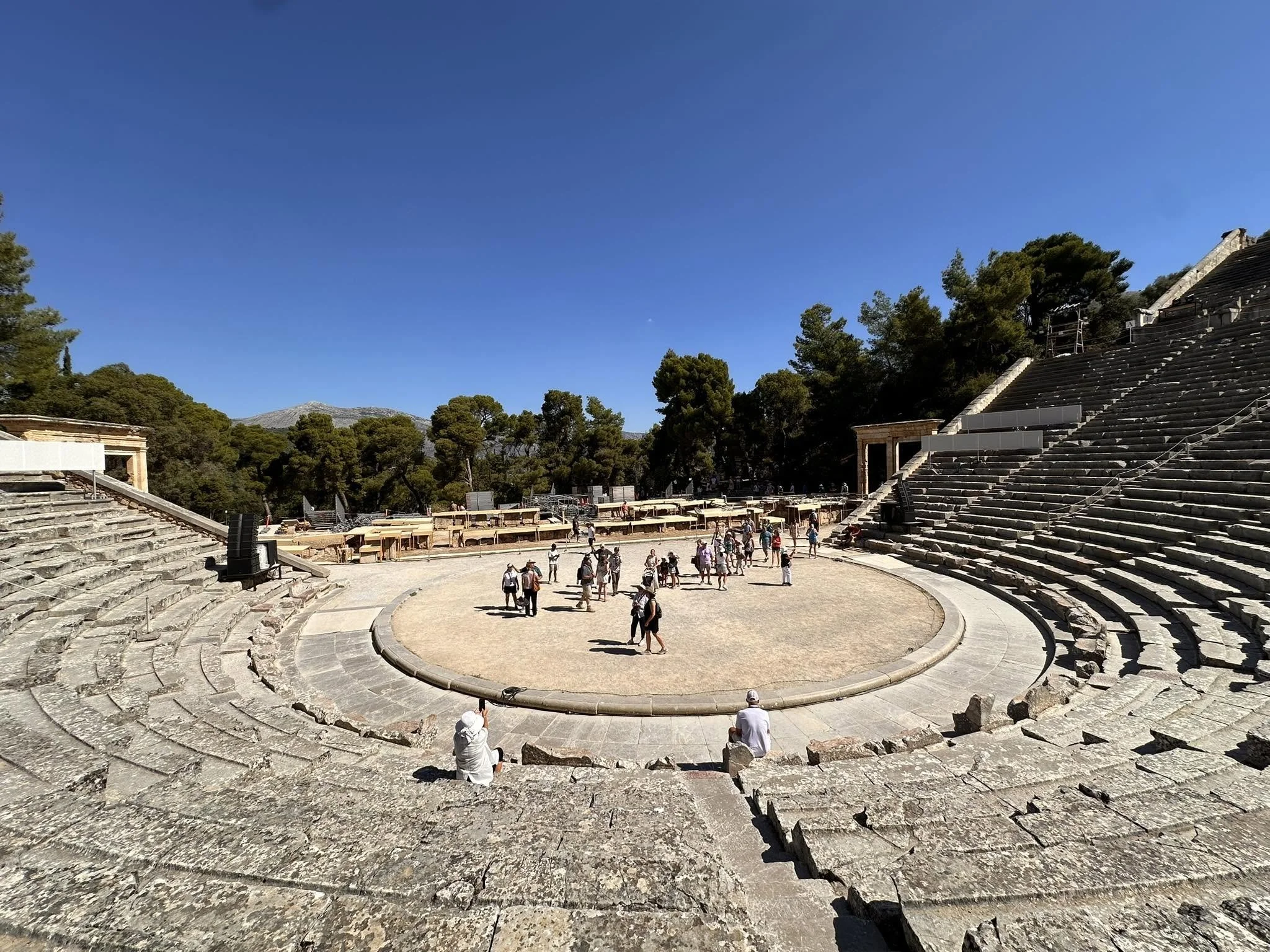
The centerpiece is the Ancient Theatre of Epidaurus, one of the most perfectly preserved performance spaces of antiquity. Built into the natural slope of Mount Kynortion in the 4th century BCE, it remains a masterpiece of proportion and restraint: a circular orchestra of pale limestone, a low stone skene, and a vast semicircle of tiered seating rising with almost mathematical elegance into the hillside. Designed by Polykleitos the Younger, it accommodates approximately 14,000 spectators, yet still feels intimate in a way that defies scale.
We stood for a long time in the center of the orchestra, speaking softly and listening. The acoustics are famously near perfect- shaped by geometry, stone, and a kind of natural collaboration with the landscape itself. A voice carries effortlessly to the highest rows without strain or projection, and even the smallest sound seems to find its place. A gentle breeze moves through the theatre as well, almost as if it is part of the design itself- lifting sound, softening silence, and reminding you that this was never meant to be a sealed space, but an open conversation with nature.
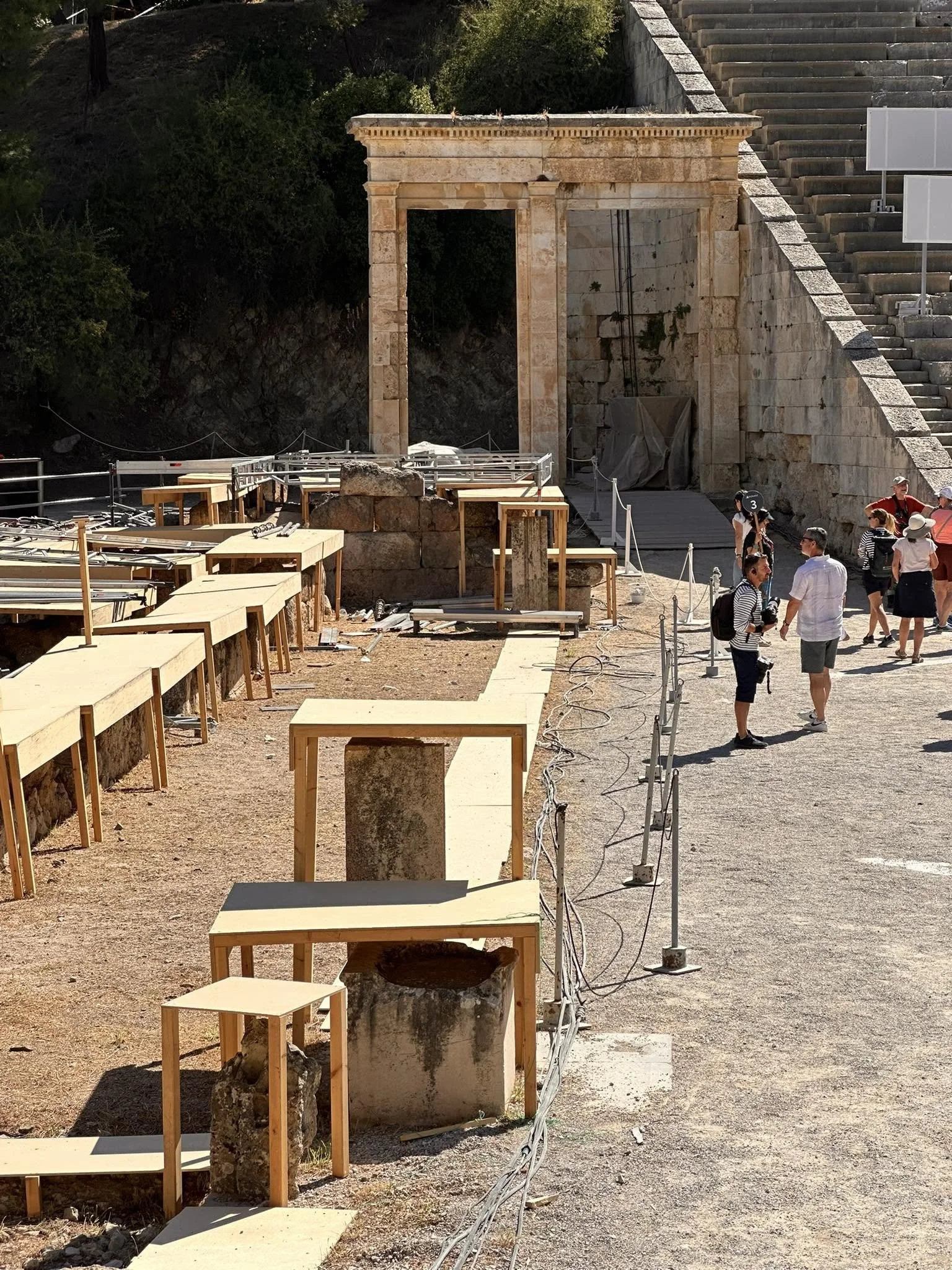
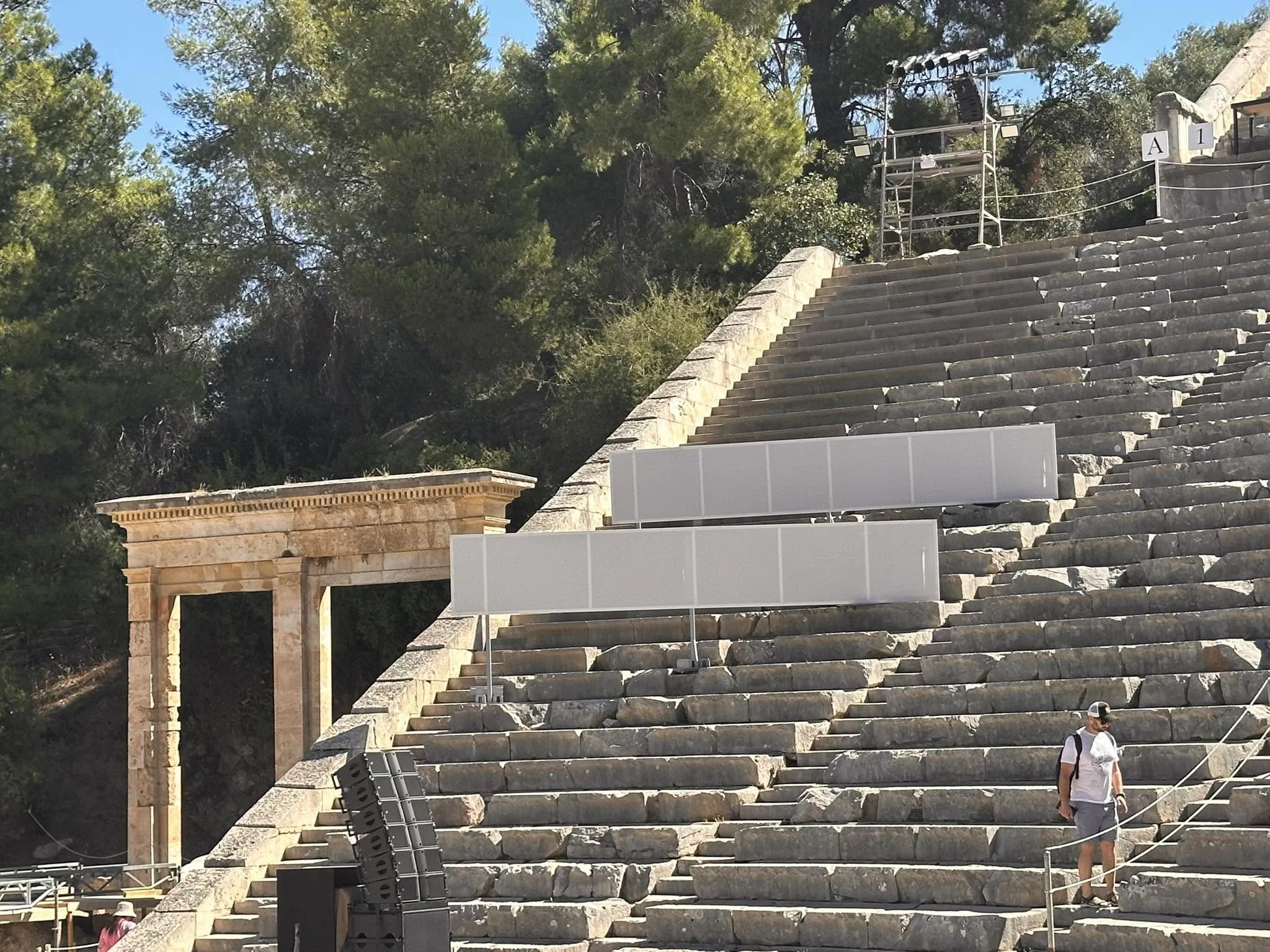
Even in the stillness of the morning, the theatre was not empty in spirit. Workers were already moving quietly through the stone seats and stage area, preparing for the next performance- tending to the space with a careful, almost ritual precision that felt like a continuation of its long life in performance.
And only two days ago, on June 20, the theatre once again fulfilled its ancient purpose with a modern audience gathered under the same sky for Cherubini’s Medea. It feels especially resonant here: Medea was made immortal in modern cultural memory by Maria Callas, whose historic performance of the role at Epidaurus in 1961 remains one of the defining moments of 20th-century opera- a kind of return of the myth to its original home.
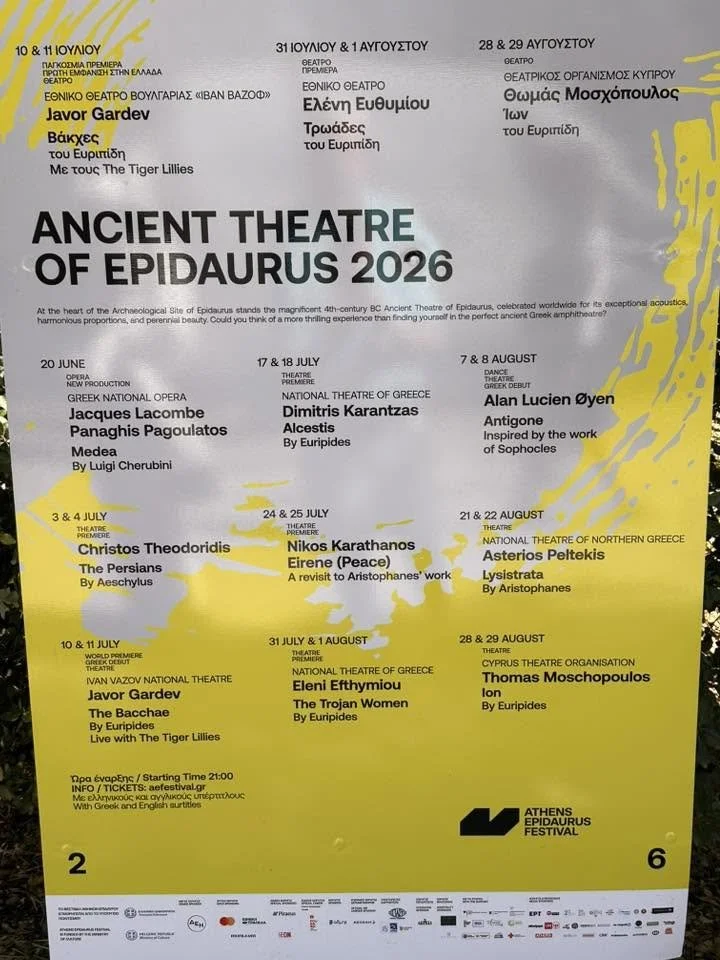
Each summer, the theatre comes alive again as part of the Athens Epidaurus Festival, a tradition that began in the 1930s and continues to bring opera and classical drama back into this ancient setting. The 2026 season continues that lineage with Aeschylus’ Persians (3–4 July), Euripides’ Bacchae (10–11 July) and Alcestis (17–18 July), Aristophanes’ Peace (24–25 July), and concluding with The Trojan Women (31 July–1 August). To experience these works here is to understand performance in its most elemental form- unamplified, unshielded, and entirely dependent on presence.
Aristotle wrote in the Poetics that tragedy works “through pity and fear effecting the proper purgation of these emotions.” Standing there this morning, that idea felt less like theory and more like architecture- as if the space itself was designed to hold emotion until it could be safely released.
It is easy to see why the design of Epidaurus has echoed through later cultural life, influencing the idea of open-air performance spaces around the world, including the summer festival atmosphere at Tanglewood Music Festival in Massachusetts.
What stays with me most, though, is the simplicity of it all: a hillside of stone, a circle of sky, and a theatre that does not impose itself on nature but dissolves into it- allowing story, voice, and silence to exist on equal terms.